




Give Me the Backstory: Get to Know Joanna Natasegara, the Director of “The Disciple: A Wu-Tang Fable”

By Ramona Flume

One of the most exciting things about the Sundance Film Festival is having a front-row seat for the bright future of independent filmmaking. While we can learn a lot about the filmmakers from the 2026 Sundance Film Festival through the art that these storytellers share with us, there’s always more we can learn about them as people. We decided to get to the bottom of those artistic wells with our ongoing series: Give Me the Backstory!
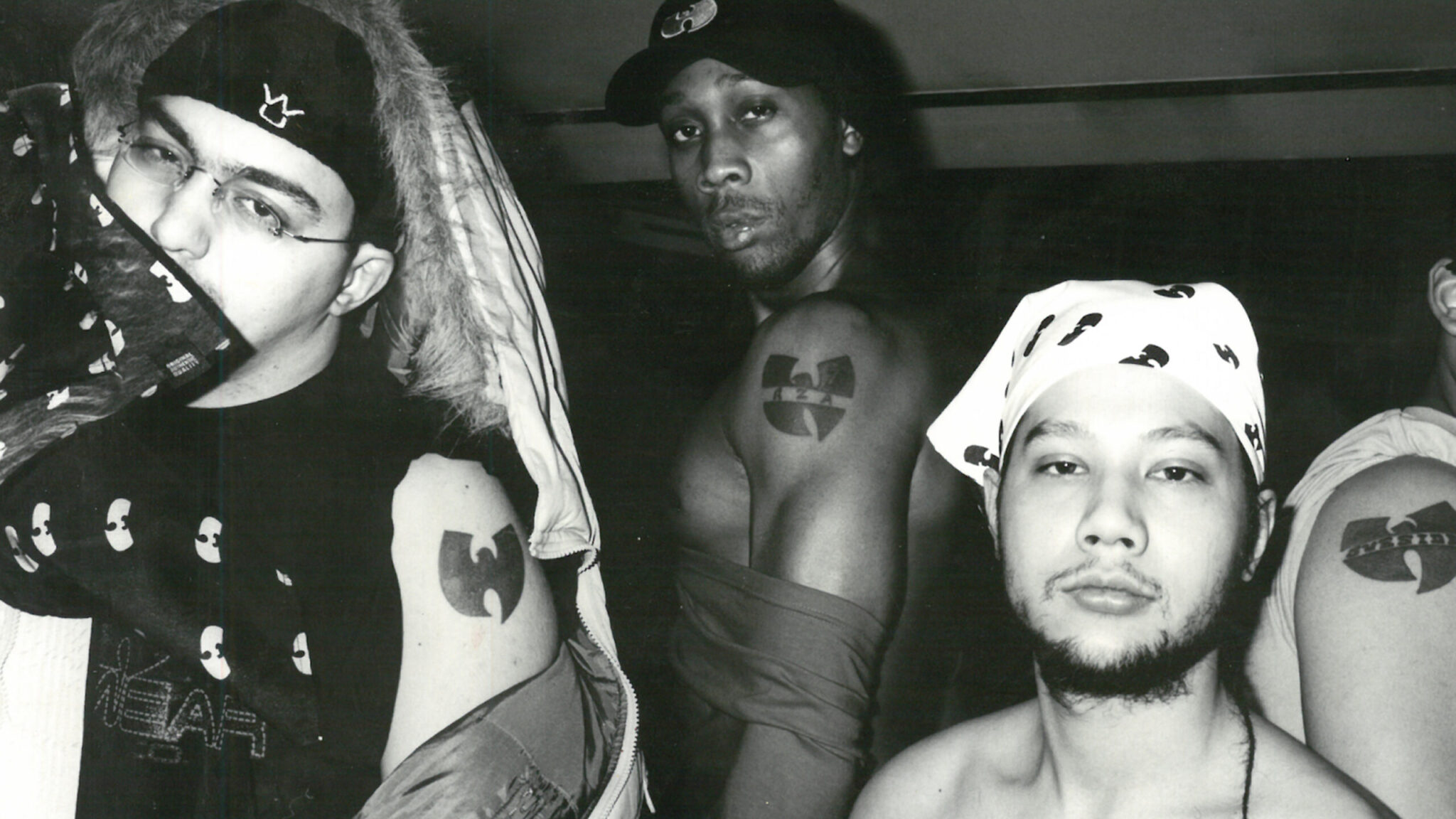
Most fans are happy just to get close to the stage at their favorite band’s show. Tarik “Cilvaringz” Azzougarh, a Dutch Moroccan Wu-Tang Clan devotee, made it all the way into the group’s inner circle — and helped create its most exclusive album.

That secretive double album, Once Upon a Time in Shaolin, was pressed as a single copy and barred from commercial sale until 2103, a gambit that set off a firestorm over what constitutes fine art and who has the right to own it. Conceived and produced by Cilvaringz and RZA as a protest against the capitalistic commodification of music, the album was infamously bought in 2015 by disgraced pharma executive Martin Shkreli. Director Joanna Natasegara’s The Disciple: A Wu-Tang Fable, which premiered at the 2026 Sundance Film Festival, unspools that wild saga with a crate digger’s love of ’90s hip-hop as she traces the overarching story of an immigrant outsider who became one of Wu-Tang Clan’s most improbable collaborators. 

Below, Natasegara tells us about the challenges of condensing 30 years of music history into one documentary, the creative heroes she considers “wizards,” and why fanboys should always chase their dreams.

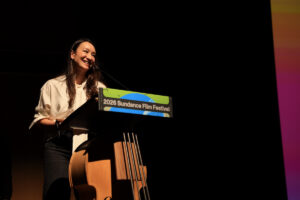
Director Joanna Natasegara at the premiere of "The Disciple: A Wu-Tang Fable" at the 2026 Sundance Film Festival. (Courtesy of Sundance Institute | Photo by Jemal Countess)

What was the biggest inspiration behind this film?

As I was considering how to make this film, I thought about the core themes that resonated with me. The wonderful beauty of connected immigrant and minority communities sharing cultures and influences was a key part of my childhood and is at the core of this story. It’s also a theme that was explored beautifully in the ’90s in both music and film, and as such, La Haine was a key reference. The hip-hop videos that the Clan and others made also featured, as well as so many of the cult ’90s movies we all grew up on that were influenced by martial arts movies or the Clan itself.

Films are lasting artistic legacies. What do you want yours to say?

I hope this story entices people to go for what they want in life and to rid themselves of the shackles that hold them back. Tarik, as the ultimate fanboy, never doubted his dream and just went for it. I think there’s a lot to be said for that. The Wu-Tang Clan and the philosophies that inspired them were always grounded in ethics and positivity, so I think the combined message is go for it, while staying ethical, and have fun!

What was your favorite part of making the film? What memories from the process stand out?

I have absolutely loved making this film. It’s been a joyful departure from my previous work and a delightful reminder of some of the positive elements of ’90s culture. Also, the music is just really good. We danced and laughed in the edit, in equal measure.

What was a big challenge you faced while making this film?

Condensing a 30-year story, with many twists and turns and a large cast of characters down into a film has been a challenge and a half but one that we’ve relished. The characters are all larger than life and it’s been wonderful spending time with them.

Why does this story need to be told now?

I think an empowering story about the cultural power of immigrant and minority communities and the beauty of tolerance is a pretty necessary one right now.

Why is filmmaking important to you? Why is it important to the world?

I’ve produced films for a long time, always to share untold stories or communicate something. I think right now, in a post-truth era, and one that is increasingly frightening and negative, we need stories more than ever and to find each other in connection and understanding instead of fear and divisiveness.

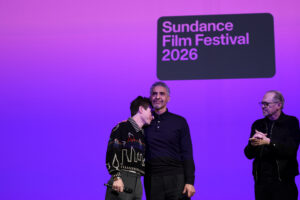
Shabazz the Disciple attends the Q&A for “The Disciple: A Wu-Tang Fable” at the 2026 Sundance Film Festival. (Courtesy of Sundance Institute | Photo by Jemal Countess)

What is something that all filmmakers should keep in mind in order to become better cinematic storytellers?

Listen more.

Tell us why and how you got into filmmaking.

I got lucky! Or unlucky… Depends what day it is!

If you weren’t a filmmaker, what would you be doing?

I [have] no idea. This is the only thing I know how to do.

Who are your creative heroes?

Barry Jenkins, Ang Lee, Robin Williams — anyone who can marry complexity with humanity is a wizard in my eyes.

Director Joanna Natasegara attends the premiere of THE DISCIPLE at Eccles Theatre on January 22, 2026, in Park City, UT. (Photo by Jemal Countess/Sundance Institute)

What three things do you always have in your refrigerator?

Hot sauce, cheese, and greens.

What was the last thing you saw that you wish you made?

I think 2000 Meters to Andriivka is a masterpiece of cinema.

One thing people don’t know about me is _____.

Well, I guess people may not have known how much I love the Wu-Tang Clan before this film?

Which of your personal characteristics contributes most to your success as a storyteller?

I think I am very, very curious about what makes people tick. That helps.

Tell us about your history with Sundance Institute. When was the first time you engaged with us? Why did you want your film to premiere with us?

This is my third trip to Park City. The first time was with The Edge of Democracy (Petra Costa), and the second [was] last year, with The Dating Game (Violet Du Feng). [It] feels serendipitous for the third time to be with my own debut.

News title Lorem Ipsum

Donate copy lorem ipsum dolor sit amet

Lorem ipsum dolor sit amet, consectetur adipiscing elit. Ut elit tellus, luctus nec ullamcorper mattis, pulvinar dapibus leo. Lorem ipsum dolor sit amet, consectetur adipiscing elit. Ut elit tellus, luctus nec ullamcorper mattis, pulvinar dapibus leo. Lorem ipsum dolor sit amet, consectetur adipiscing elit. Ut elit tellus, luctus nec ullamcorper mattis, pulvinar dapibus leo. Lorem ipsum dolor sit amet, consectetur adipiscing elit. Ut elit tellus, luctus nec ullamcorper mattis, pulvinar dapib.